
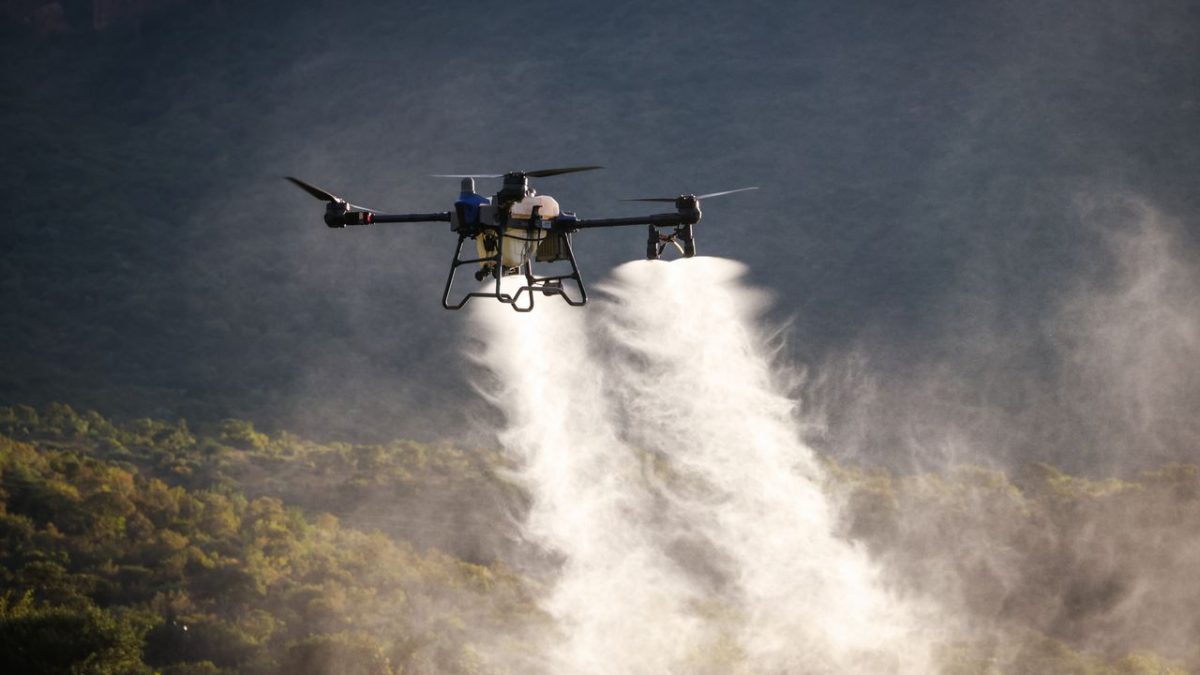

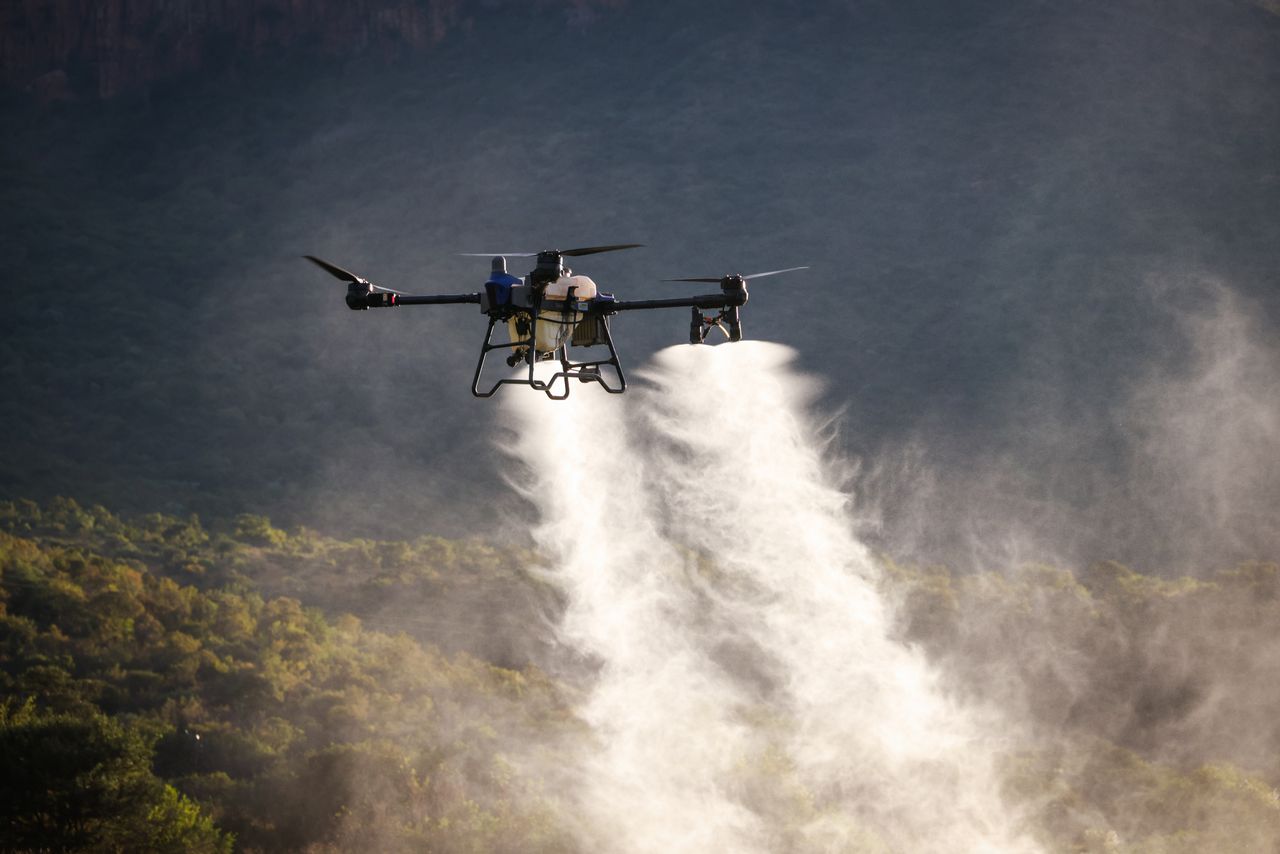
Canadian farmers will soon have another option for protecting crops after Health Canada approved the use of drone technology to apply pesticides that are already authorized for conventional aerial application.
The new science-based policy, announced June 30, removes a regulatory barrier that has limited the use of Remotely Piloted Aircraft Systems (RPAS), more commonly known as drones, for pesticide application. Developed through collaboration between Health Canada, Agriculture and Agri-Food Canada and industry, the policy is intended to help farmers protect crops more efficiently while maintaining Canada’s existing standards for human health and environmental protection.
For decades, aerial spraying by conventional aircraft has played an important role in agriculture, but it comes with limitations. Wind can contribute to spray drift and uneven coverage, aircraft consume significant amounts of aviation fuel, and larger payloads and spray systems can make highly targeted, low-altitude applications more challenging.
Drones offer a different approach.
Operating from confined locations and flying lower and slower than conventional aircraft, they can provide greater application precision while reducing fuel use and emissions. They also make it easier to treat fields and areas that may be difficult to reach with traditional equipment, helping growers respond more quickly to pest-management needs and better protect crop yields.
Health Minister Marjorie Michel said the policy supports both agricultural innovation and public safety:
“By enabling the use of drone technology, we are supporting Canadian farmers, strengthening our food system and maintaining our rigorous standards for protecting the health and safety of Canadians when it comes to pesticide regulation in our country.”
Agriculture and Agri-Food Minister Heath MacDonald said the technology reflects the industry’s continued adoption of new farming practices:
“Innovative practices are being adopted by farmers across the country to improve crop production and support the long-term health of their farmland. By supporting our hard working farmers with the use of drone technology, we are strengthening the resiliency and competitiveness of Canada’s agricultural industry and food system.”
The policy also brings Canada into closer alignment with countries including Australia and Japan, where drones are already used for pesticide application. As drone technology continues to evolve, Health Canada says it will continue using science-based decision-making to support innovation while maintaining strong protections for people and the environment.
