
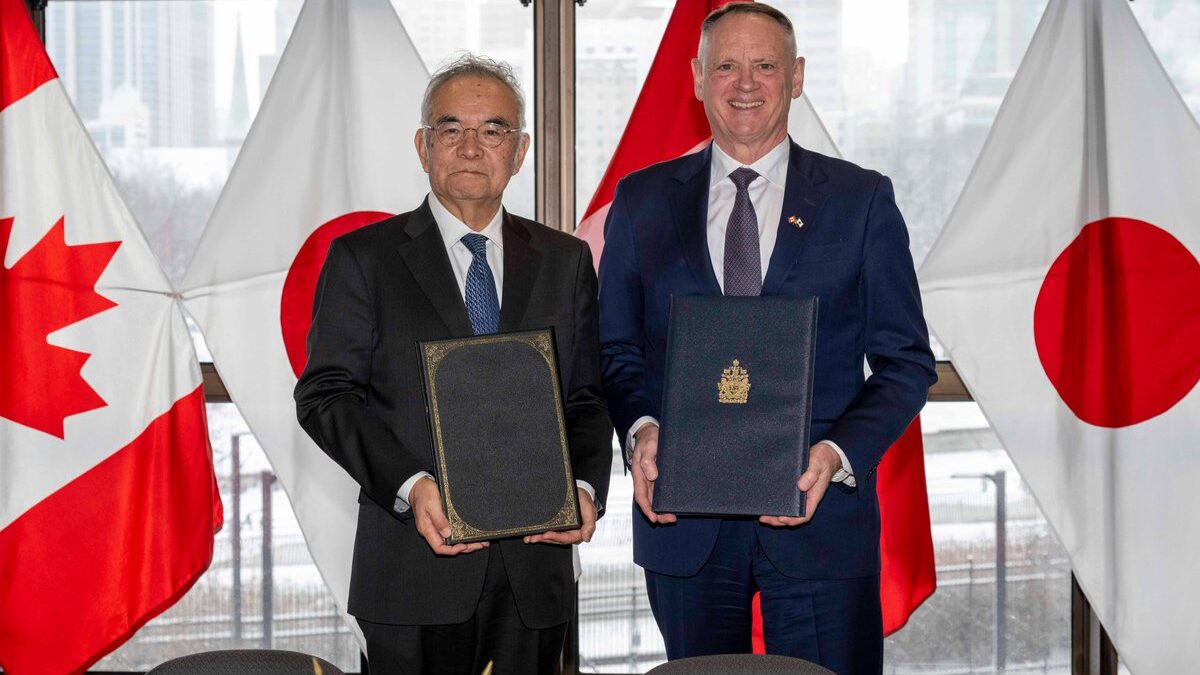

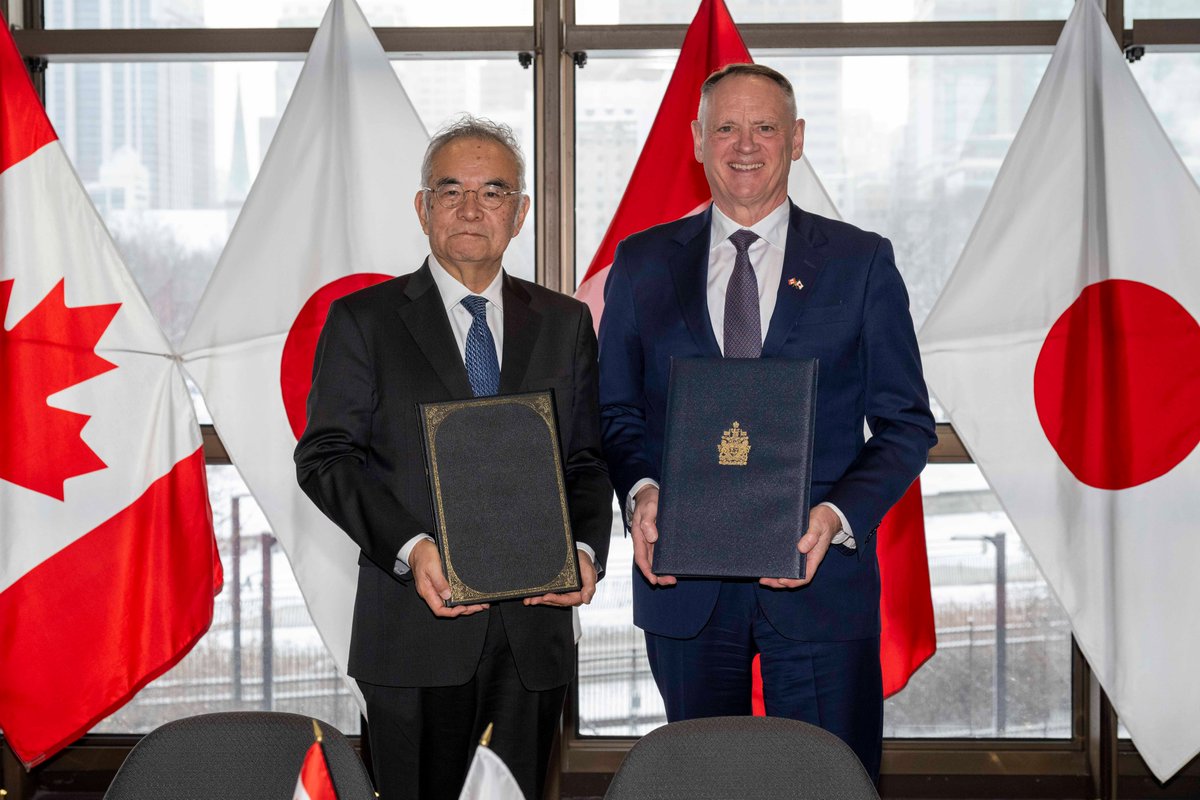
Canada and Japan have taken a significant step toward a more integrated, future-focused defence partnership, signing a new agreement that strengthens industrial cooperation, expands technology collaboration, and reinforces shared security interests in the Indo-Pacific.
On January 27, 2026, in Ottawa, the Honourable David J. McGuinty, Minister of National Defence, met with His Excellency Kanji Yamanouchi, Japan’s Ambassador to Canada, to formalize an Equipment and Technology Transfer Agreement (ETTA) between the two countries. The accord establishes a framework that will allow Canadian and Japanese companies to co-develop projects requiring the transfer of equipment, technology, or intellectual property to Canada—creating new pathways for collaboration across both nations’ defence industries.
At its core, the ETTA is designed to make it easier for industry on both sides of the Pacific to work together, build together, and innovate together. By permitting Japan to export defence equipment and technology to Canada, the agreement also provides the Canadian Armed Forces (CAF) with an additional and trusted source of supply, while supporting the growth and resilience of both countries’ industrial bases.
The signing comes as Canada accelerates generational, long-term investments in military modernization and capability renewal. As these investments advance, the ability to collaborate with trusted international partners on advanced systems, platforms, and enabling technologies becomes increasingly important. The ETTA positions Canadian and Japanese firms to play a more direct role in meeting those needs through joint development and industrial cooperation.
“Strengthening our security and defence cooperation in the Indo-Pacific region is essential, and it remains vital that we work together to address the challenges of the future. The signing of the ETTA marks an important advancement in the Canada–Japan defence partnership, reinforcing our shared commitment to stability and collaboration, and growing industries and jobs in both countries. As Canada makes generational, long-term investments in the Canadian Armed Forces, agreements with trusted partners like Japan are more important than ever,” stated the Honourable David J. McGuinty, Minister of National Defence.
Beyond industrial collaboration, discussions between Minister McGuinty and Ambassador Yamanouchi underscored defence materiel and defence industrial cooperation as a growing area of mutual interest. The two leaders also spoke about increasing military collaboration between the Canadian Armed Forces and the Japanese Self-Defense Forces, reflecting a shared desire to deepen operational ties alongside industrial ones.
The agreement also aligns with Canada’s broader commitment to supporting greater collaboration between NATO and its Indo-Pacific partners, including Australia, Japan, New Zealand, and the Republic of Korea. As a Pacific nation, Canada has emphasized that security and defence partnerships in the Indo-Pacific are central to its national interests and to the stability of the wider international system.
Taken together, the ETTA represents more than a single bilateral accord—it signals a maturing defence relationship built on trust, shared strategic priorities, and a recognition that modern security challenges demand closer cooperation between governments, militaries, and industry.
With the signing of this agreement, Canada and Japan are laying the groundwork for deeper industrial integration, stronger military ties, and a more resilient collective approach to defence in an increasingly complex global environment.
